Hot Desking Trend in Singapore
The hot-desking model in Singapore has rapidly evolved from a corporate cost-cutting measure into a fundamental strategic necessity driven by high real estate costs and the permanence of the hybrid work model (JLL).
1. The Market Drivers
The core reasons for the widespread adoption of hot-desking in the Singapore commercial sector are highly specific to the city-state's economic environment:
Premium Real Estate Costs: Singapore consistently ranks among the most expensive cities globally for commercial office space. Hot-desking allows companies to reduce their physical footprint or lease smaller, more affordable spaces while still accommodating their entire staff on rotation. This is viewed as the most direct method for real estate optimization and achieving a lower cost per employee.
The Hybrid Default: Following the pandemic, the hybrid model became the default expectation for skilled workers. Companies recognize that on any given day, a significant portion of their workforce will be working remotely. Hot-desking formalizes the concept of shared, unassigned desks, ensuring that the office is only designed to accommodate the peak daily occupancy, not the total headcount.
Flexibility and Scalability: Hot-desking makes offices inherently flexible. Firms can scale up or down without major renovation or leasing expenses. This adaptability is highly valued by businesses in fast-changing industries.
Why Employees Prefer a Well-Designed Hot-Desking
Employees appreciate hot-desking because it provides them with the choice and autonomy to select the specific environment that best supports their current task.
1. Increased Autonomy and Flexibility
The primary driver for employee acceptance of hot-desking is the freedom to choose where they work based on what they are doing. This sense of control is highly empowering.
Choice of Environment: Employees can choose a quiet focus pod for deep work or a dynamic collaboration hub for team brainstorming.
The Hybrid Preference: The hot-desking model perfectly supports the highly desired hybrid work model. A survey by Accenture showed that 83% of people prefer a hybrid work model, suggesting that hot-desking, which enables it, is a key component (Accenture).
2. Enhanced Productivity
When employees have a choice of where to work, they feel more in control and, consequently, more productive.
Productivity Boost: A report from the UK noted that 46% of employees reported a boost in productivity through hot-desking when the model was implemented effectively (Verdict).
Targeted Focus: Employees report improved productivity by being able to move away from distractions (the "Noise Problem") to a dedicated space when concentration is required. In well-designed, flexible offices, up to 85% of workers felt productive (Archie/Korn Ferry data).
3. Improved Collaboration and Networking
By eliminating fixed seating, hot-desking encourages "cross-pollination" among departments.
Breaking Silos: Employees are not confined to sitting next to the same four colleagues every day. They can move to sit near team members they need to collaborate with that morning, fostering spontaneous interactions and the exchange of ideas across teams.
Building Connections: This mobility helps to break down departmental silos and can foster a more inclusive and less hierarchical company culture.
4. Cleaner, Less Cluttered Workspace
A "clear desk policy" is an essential part of hot-desking, which benefits all users.
Minimalism: Since no desk is assigned, employees are encouraged to bring only what they need (laptop, notebook). This results in a cleaner, less cluttered, and more professional-looking workspace overall.
Hygiene: The necessity of clearing the desk ensures that each workspace is ready for the next person, which leads to better overall office hygiene and cleanliness.
Why Standard Hot-Desking Fails in Singapore
Most corporate clients try to implement hot-desking with off-the-shelf furniture, resulting in three common failures:
The "Desk Dash": Employees rush in early to secure the few good spots (by the window, near the charging station), defeating the purpose of flexibility.
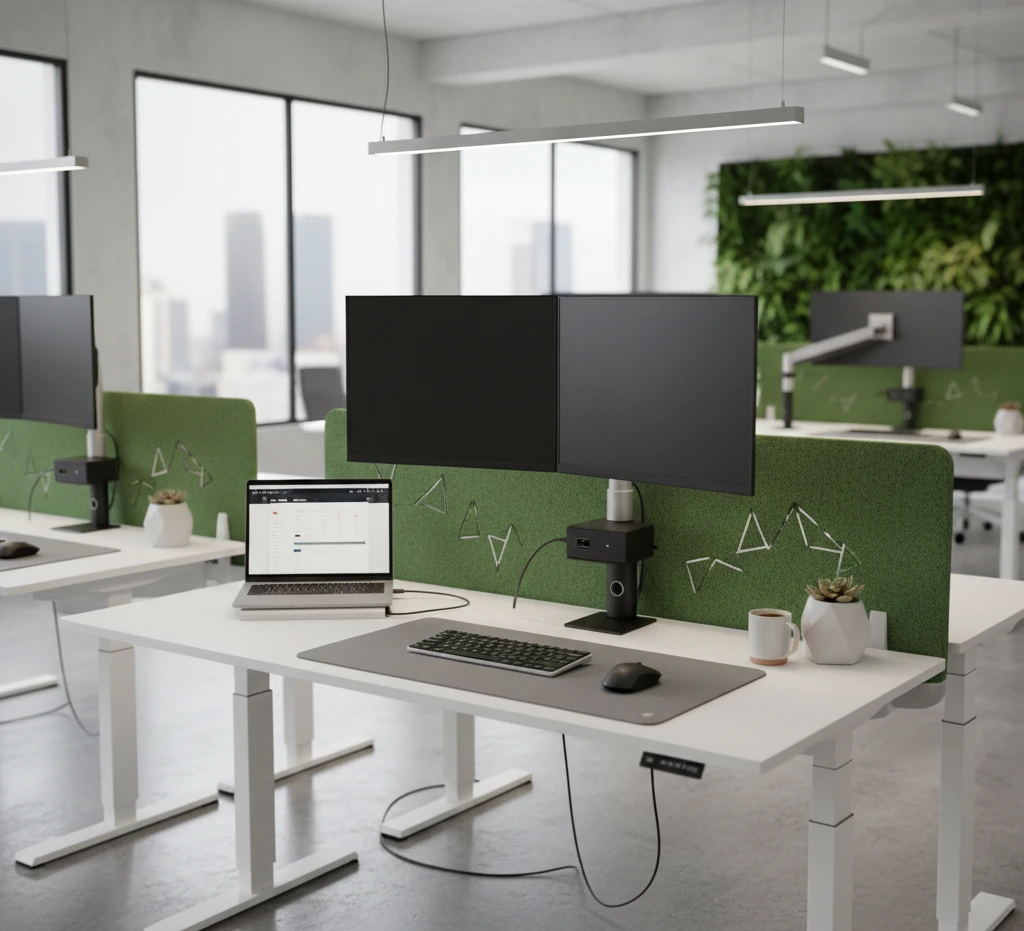
The Tech Nightmare: Desks lack universal docking stations, proper cable management, or enough power points, leading to a constant mess and IT headaches.
The Noise Problem: No dedicated quiet zones or acoustic solutions, leading to frustrated employees who retreat back to their quiet homes
The Crucial Caveat: Implementation Matters
While the benefits are strong, it's critical to note that if hot-desking is poorly implemented, it can lead to negative results, such as lower job satisfaction and difficulty locating team members.
The Solution: The success hinges entirely on custom design that implements an Activity-Based Working (ABW) layout. This means providing the right variety of spaces (quiet pods, collaboration tables, phone booths) and supporting it with desk-booking technology.
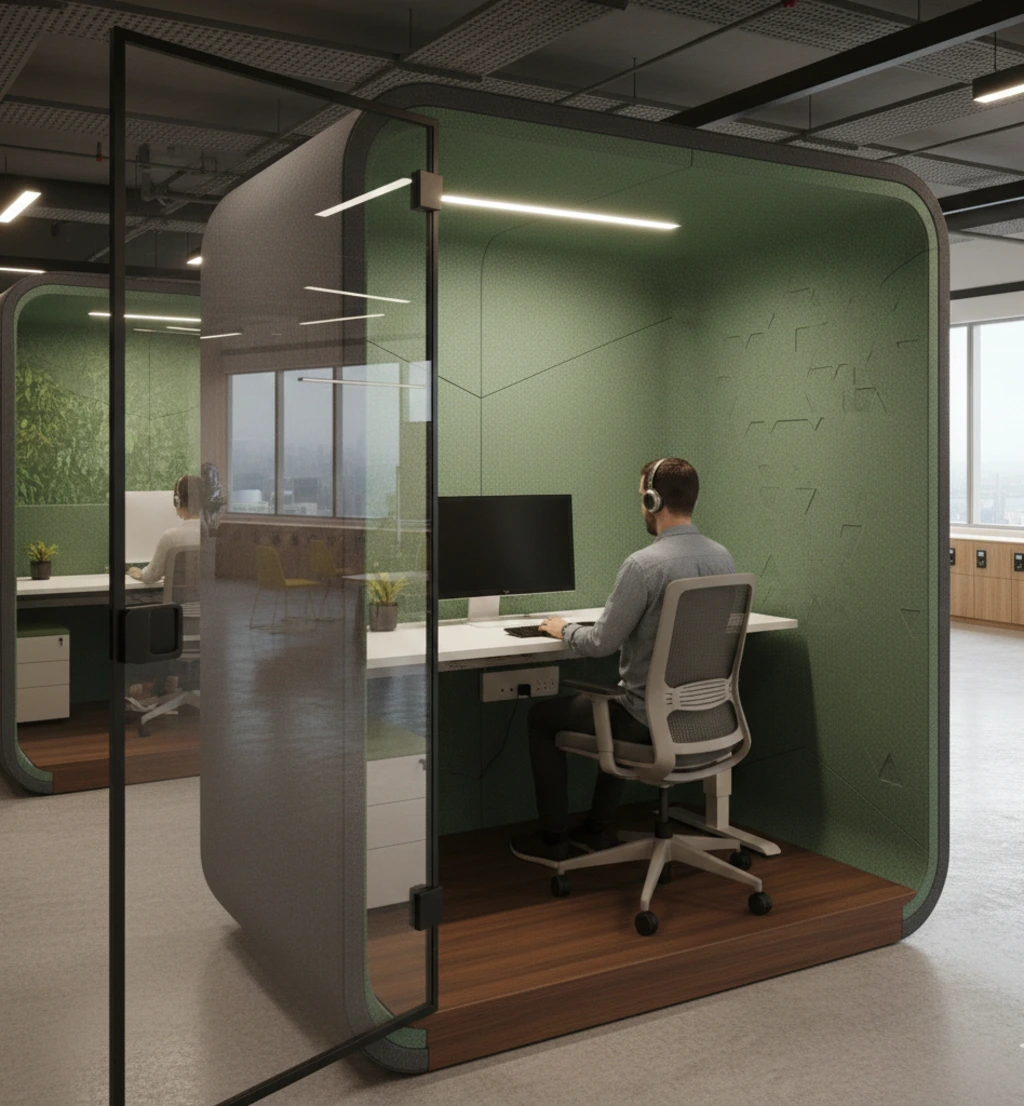
What a good hot desking Design looks like
Designing the Four Critical Custom Zones
A successful hybrid office must be broken down into specialized "neighborhoods." We customize the ratio and features of these zones based on your company's actual workflow.
A. The Hyper-Focus Pods
The #1 complaint about hot-desking is noise. We integrate tailored acoustic solutions:
Custom Design: Instead of generic booths, we design built-in acoustic pods with specific finishes (e.g., recycled PET felt for maximum sound absorption) that fit the existing architectural lines of your Singapore office space.
Eco-Advantage: Using sustainable, high-density materials like cork or felt ensures superior soundproofing that is also low-VOC and non-toxic for employee health.
B. The Seamless Hot Desks
The actual shared desks must be plug-and-play to minimize setup friction.
Custom Design: Desks feature integrated power grommets and cable trays specific to your tech needs (e.g., more USB-C ports for a design firm, more traditional monitors for a finance team).
Ergonomics: Every desk is a height-adjustable sit-stand desk with an ergonomic chair, ensuring every employee can customize their personal setup, reduce body strain and improving comfort.
C. The High-Energy Collaboration Hubs
This is the area employees must come in for. It needs to be flexible and fun.
Custom Design: Modular, lightweight furniture (tables on castors, stackable chairs) designed to be reconfigured by employees in minutes. We incorporate vertical whiteboard walls or writable surfaces into glass partitions.
Branding: We use custom color palettes and finishes that integrate your corporate brand identity, making the space unique and inspiring.
D. The Social & Wellness Lounges
These unassigned, comfortable areas reinforce culture and facilitate spontaneous connection.
Custom Design: Create a café-style pantry or lounge with biophilic design elements (vertical gardens, natural wood finishes) to introduce calm and improve air quality—a critical wellness component in Singapore.
Flexibility: Include lounge chairs, bean bags, and café tables near natural light sources for mental breaks and casual one-on-one meetings.
Conclusion: Transform Your Office into a Strategic Asset
Hot-desking is no longer a trend; it's a permanent cost-saving, efficiency-boosting strategy. But it requires more than just furniture, it requires an intelligent, custom space plan.
By engaging an interior design firm like ilprojects.eco, you get a tailored solution that maximizes every square foot, adheres to Singapore's regulatory requirements, and builds a workspace where your employees want to be.
Ready to find out your ideal hot-desking ratio? Contact us today for a Commercial Space Assessment and receive a custom 3D concept sketch of your new hybrid office.